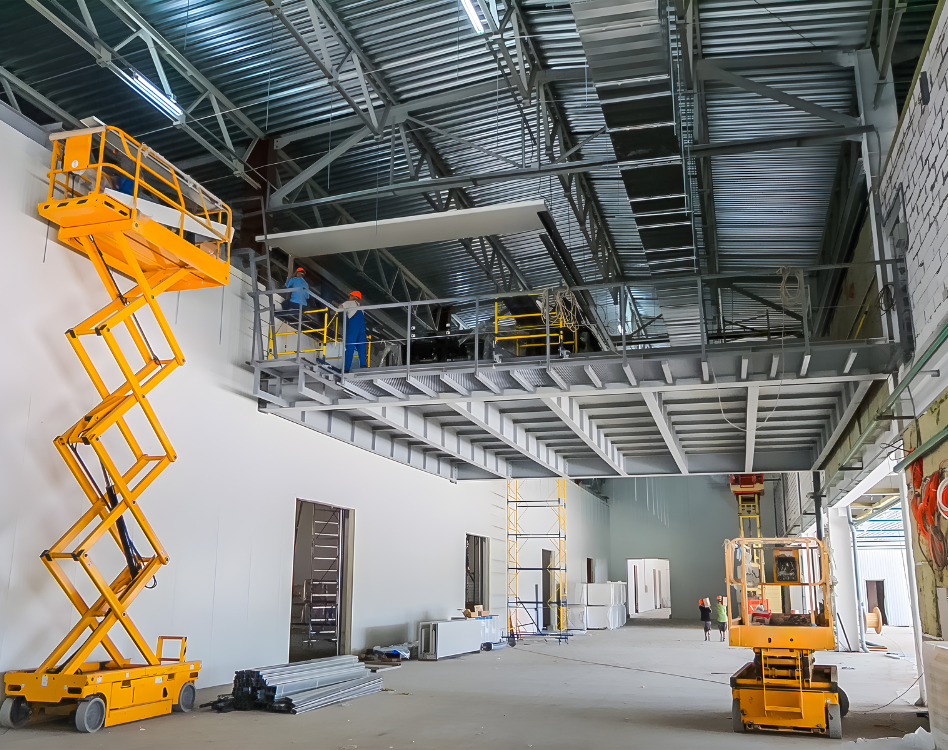
A subcontractor was working at height in a scissor lift, performing electrical work. At the same time, a garage door automatically opened and struck the elevated platform.
As a result, the lift tipped onto two wheels.
Fortunately, an employee reacted quickly and managed to prevent the worst.
I told him they had been lucky, because it could have had major consequences particularly with the CNESST.
But that’s not the real question! What if this situation had resulted in a fatal fall?
The response I often hear in these situations is:
- It’s not our employee. Therefore, it’s not our responsibility.
This is a mistake and a costly one.
What the law says (and what many overlook)
In Quebec, the Act respecting occupational health and safety is very clear.
Section 51 – Employer obligations
An employer must:
- Take the necessary measures to protect the health and ensure the safety and physical well-being of workers
- Ensure that work methods are safe
- Identify, control, and eliminate risks
And here is the key point:
This obligation is not limited to your direct employees. Even if the person is not your employee, Section 51 requires you to take the necessary measures to ensure safety within your work environment.
Section 49 – Worker obligations
A worker (including a subcontractor) must:
- Take the necessary measures to protect their own health and safety
- Comply with established safety rules
However, this does not relieve the company of its responsibilities.
Subcontractor or not, your responsibility remains
In a work environment:
- You control the premises
- You control the equipment
- You are aware of the risks
Therefore, you must oversee and coordinate work—even when it involves subcontractors.
In this case:
- An automatic door represents a known hazard
- Working at height represents a critical risk
- Lack of coordination = foreseeable danger
This is exactly the type of situation the law is designed to prevent.
What could happen in the event of a serious accident
If the situation had gone wrong, the company could have:
- Been investigated by the CNESST
- Received offence notices
- Faced significant fines
- Been involved in civil litigation
- Suffered reputational damage
In practice, situations like this frequently lead to enforcement actions and penalties.
In extreme cases, criminal charges may even be considered (criminal negligence).
What case law actually confirms
Occupational health and safety case law is consistent:
A company cannot avoid its obligations simply because the work is performed by a subcontractor.
Courts have repeatedly held that:
- The party controlling the workplace has prevention obligations
- It must identify, eliminate, or control risks in its environment
- It must ensure proper coordination of work, including with third parties
What this means in practice
- A company can be held responsible when an accident occurs on its premises even if the victim is not its employee
- Lack of coordination between the company and subcontractors may constitute a breach of legal obligations
- Allowing subcontractors to work in a known hazardous environment without proper controls may engage the company’s liability
Responsibility may be shared, but it is never fully transferred.
What companies should do (in practice)
Best practices include:
- Risk assessment before work begins
- Identify hazards (automatic doors, traffic, working at height, etc.)
- Work coordination
- Isolate or neutralize hazardous equipment (e.g., garage doors)
- Clear procedures
- Lockout/tagout where applicable
- Safe work methods
- Supervision
- Ensure rules are followed
- Communication
- Inform subcontractors of site-specific risks
Common mistakes in the field
- Work areas not properly defined or secured
- Automatic equipment not isolated or locked out
- Poor communication between teams and subcontractors
- Inadequate coordination of simultaneous work
- Insufficient training or incomplete transfer of risk-related information
- Lack of supervision during high-risk work
Result: accidents that are often entirely preventable.
The right question to ask
Not
- Am I legally responsible?
But
- Have I done everything a reasonable employer would have done to prevent this accident?
Conclusion
In this case, fortunately, no accident occurred. But there was a clear warning.
- A near-miss is often a sign of a future accident
- In OHS, serious incidents are rarely surprises
- They are usually preceded by ignored warning signs
And most importantly, ignoring your responsibilities does not make them disappear.
At Bedard Human Resources, we support organizations in managing and preventing occupational health and safety risks by helping them structure their practices, ensure compliance, and better oversee both their teams and subcontractors.
For more information about our OHS consulting services, you can contact Stephane Pepin. We operate across Quebec and Canada, implementing practical, effective solutions tailored to each organization’s operational reality and risk environment.